We stop at the little kiosk on the main road to buy vast quantities of chemicals to make soap and bleach. 100 litres of soap ingredients will set you back £17. While not exactly The Body Shop’s finest, it does the job.
En route to Limuru, David tells me about something he saw on the news about donkey slaughterhouses being on the rise again. The trade was banned in 2020 but the ban was overturned in 2021. Amazing how far a massive bung will get you with the lawmakers here. Far be it from me to say anything against the lovely people who gave us sweet and sour sauce and 100 ways with chow mein, but almost the entire trade is driven by the Chinese. Where is Ricky Gervais when you need him ?
We meet Purity who is “feeling to vomit”, but we head off to the funding anyway Business visits will be on Thursday, along with more funding.
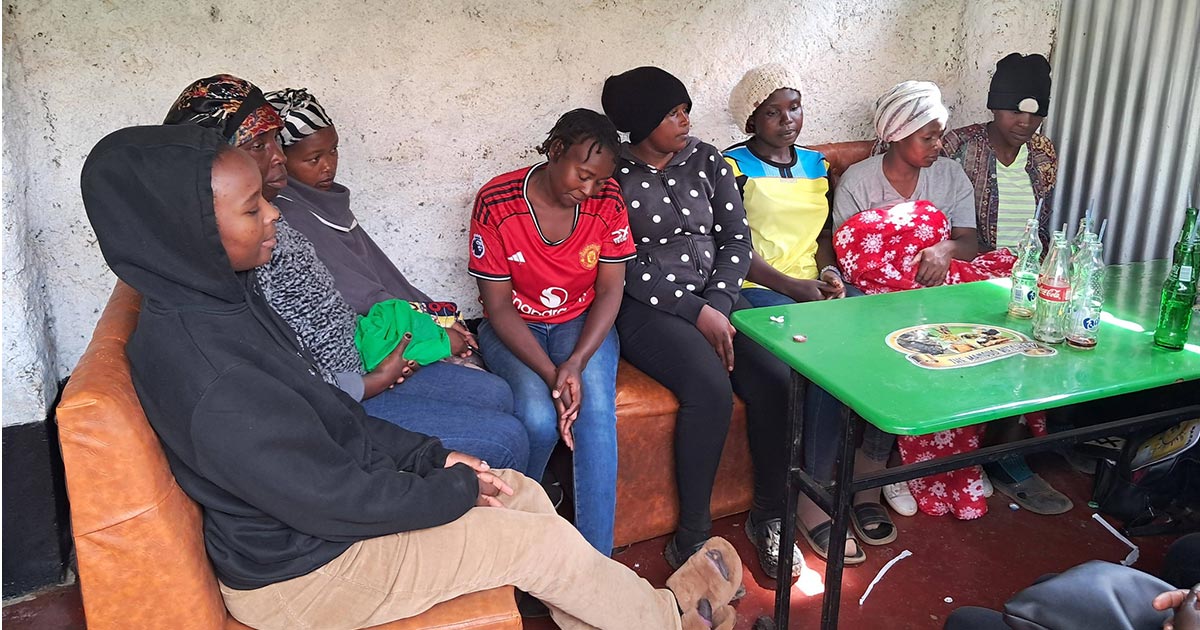
We are meeting the women round the back of an eaterie which specialises, as so many do, in meat. Somehow the smell of dead goat being boiled in vast quantity and limited space is overwhelming.
If only they had a vegan option, tofu suddenly seems like an excellent option. In the background we can hear the plaintive bleating of the next goat in line for the chop.
The women are an interesting bunch. And different from Mama’s usual beneficiaries. In, I think, a good way. There are ten groups, each with an average of 12 members, The first impressive thing about the women is that, although many of them are HIV+, only one of the groups has many positive children. All the women went to free clinics to gets the meds to decimate the chances of transmission.
The second impressive thing is that eight out of the ten groups have already made the move to take their children out of the marital “home”, and are in hiding with friends. They did this on the basis that, after discussion with Purity. They came up with good business plans and believed Mama Biashara would help them. Both children and women suffered daily beatings, they have no food, the kids cannot go to school, some kids are just thrown out on the street to fend for themselves. Only two groups are still at ‘home’, The rest have taken the huge step into the unknown to protect their children. And not being beaten to a pulp themselves each day is an obvious plus. The business plans are equally impressive – profit margins are anything from 150% to 300% (this one being cassava, which will be sold for flour to make porridge and also deep fried ). Onions and yellow beans, beetroot and eggs, thorn melon and pumpkins, local avocado, tea leaves and carrier bags. Every group has found orders to guarantee they will sell all their stock in a day. Mama B starts them with a 90kg bag of whatever and they take some of the profit and put it in the ‘bank’, plus buy another sack, and on the third day they buy more, and the amount they buy and sell grows., the next day they buy another, day three they will buy two bags. It is basic but it works.
After the ten have gone, there is a young woman who is part of our ever growing cleaning group. Last visit we set up a couple of groups with fantastic contracts and they so impressed people that we are now getting more and more offers of really well paid work for our women. This latest new group have a contract to clean a supermarket. And 15 new women will escape to a new life.
Purity has decided that a little something to eat is in order, which gives David his chance to do the “Kenyan Man” thing and walk up and down the display of dead animal deciding which bit we will have. This is the inalienable right of those blessed with the superior chromosome.
There is boiled goat, grilled goat, goat with a bit of ugali, ugali greens and chilli with goat and broth, made from goat.
Back in Corner I get my hair washed and, lovely as it is to have a clean head, the Kenyan hairdressers’ obsession with straightening my hair is powerful, and I leave refreshed but ridiculous.